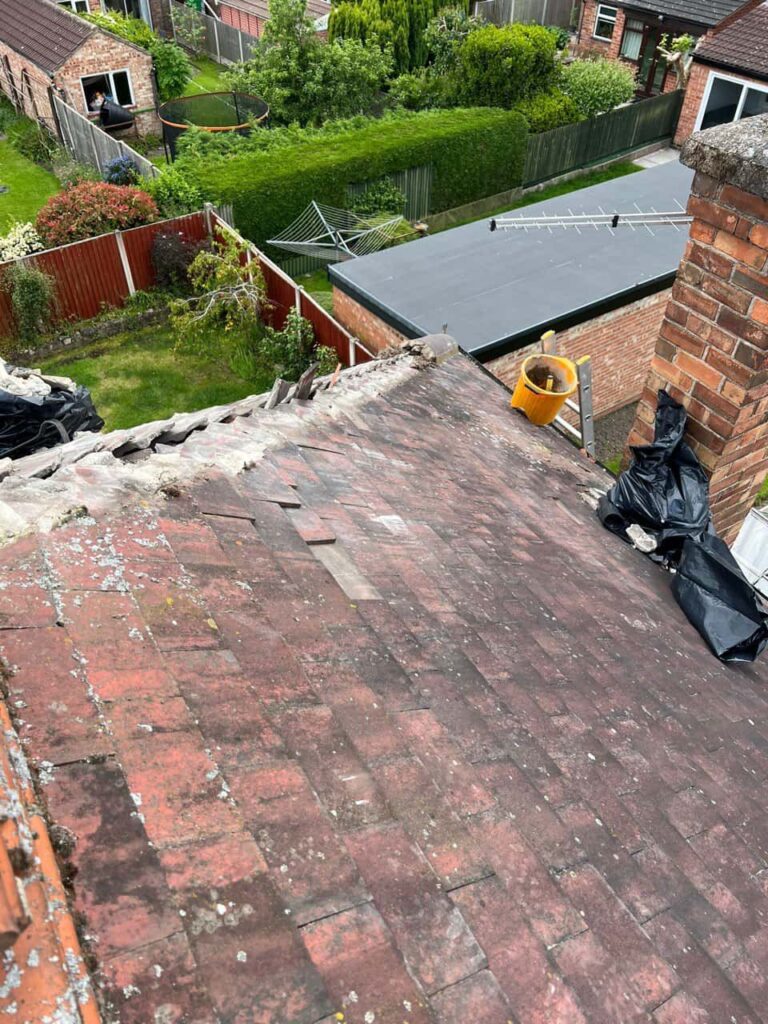
A chimney is an important feature of many properties, but its exposed position means it is continually affected by wind, rain and changing temperatures. Over time, mortar joints can deteriorate, brickwork can crack and flashing around the chimney base can fail. These problems may allow water to enter the roof, potentially leading to damp patches, damaged timbers and further deterioration.
For homeowners in Gainsborough, Lincolnshire, recognising early signs of chimney damage can help prevent minor defects from becoming more serious roofing problems. Regular inspections and timely repairs help maintain the condition of the chimney and protect the surrounding roofline.
Common Warning Signs That Your Chimney Needs Repairs
Crumbling or Missing Mortar
Mortar holds the bricks or masonry blocks of a chimney together. Repeated exposure to rain, frost and temperature changes can gradually weaken the joints, causing mortar to crack, crumble or fall away.
Look for gaps between bricks, loose fragments of mortar or areas where the joints appear noticeably recessed. Deteriorating mortar can allow moisture to penetrate the masonry, accelerating further damage and potentially affecting the chimney’s stability.
Depending on the extent of the deterioration, repairs may involve removing defective mortar and repointing the affected joints. Addressing the problem early can help protect the brickwork and reduce the risk of water entering the structure.
Cracked or Loose Brickwork
Cracks in chimney brickwork can develop through weathering, movement or deterioration of the mortar surrounding the bricks. In some cases, individual bricks may become loose, while more extensive cracking can indicate a deeper structural concern.
Visible leaning, displaced bricks or widening cracks should be treated seriously, particularly if the damage appears to be progressing. A professional assessment can help determine whether the problem is limited to the surface or requires more extensive repairs.
Homeowners should avoid attempting to secure loose chimney masonry themselves, as working at height and handling unstable structures can be dangerous.
Damaged Chimney Flashing
Chimney flashing forms a weather-resistant seal where the chimney meets the roof covering. If the flashing becomes loose, cracked or poorly sealed, rainwater can enter the junction and travel into the roof space.
One common warning sign is a damp patch on a ceiling near the chimney. You may also notice water staining in the loft or recurring leaks after rainfall. However, water can travel along roof timbers, so the visible damp area may not be directly beneath the defect.
Repairing or replacing damaged flashing helps restore protection around this vulnerable junction. The surrounding tiles, mortar and roof materials should also be inspected to identify any related damage.
Water Stains and Damp Patches
Moisture around a chimney can affect both the roof space and the rooms below. Brown ceiling stains, peeling paint, damp plaster or a musty smell may indicate water ingress.
Potential causes include defective flashing, porous brickwork, deteriorated mortar or damage to the chimney’s upper sections. It is important to identify the actual source rather than simply covering the visible marks, as the moisture may continue to spread.
A thorough roof inspection can help locate the entry point and establish the repairs needed to prevent further water penetration.
Damaged Chimney Pots and Flaunching
Chimney pots sit at the top of the stack, while flaunching is the sloping mortar bed that helps secure the pots and direct rainwater away from the chimney opening.
Cracked flaunching can allow water to enter the top of the chimney, while loose or damaged chimney pots may indicate that the surrounding masonry needs attention. Pieces of mortar or masonry falling from the chimney are another reason to arrange a prompt inspection.
Repairs may involve renewing damaged flaunching, securing or replacing defective components and checking the condition of the surrounding brickwork. The appropriate solution depends on the chimney’s design and the extent of the damage.
Moss Growth and Persistent Moisture
Moss and other organic growth may develop on chimney masonry where moisture remains for long periods. Although growth alone does not necessarily mean the chimney is damaged, it can indicate conditions that encourage water retention.
Persistent dampness can contribute to the deterioration of mortar and brickwork, particularly during colder weather when trapped moisture may freeze and expand. Inspecting the masonry, joints and surrounding roofline can help identify whether maintenance or repairs are required.
Why Chimney Repairs Should Not Be Delayed
Chimney defects can affect more than the stack itself. Water entering through damaged masonry or flashing may gradually reach roof timbers, insulation and internal finishes. Loose brickwork or chimney components can also present a safety concern if deterioration continues.
Prompt repairs help address the source of the problem before it affects a wider area. The type of work required will depend on the condition of the chimney and may include repointing, brickwork repairs, flashing replacement or repairs to the chimney’s upper sections.
Because chimneys are difficult to inspect safely from the ground, homeowners should avoid climbing onto the roof to investigate suspected damage. A professional inspection provides a safer way to assess the condition of the chimney and its connection to the roof.
Professional Chimney Repairs in Gainsborough
If you have noticed loose mortar, cracked brickwork, damp patches or signs of leaking around your chimney, arranging an inspection can help establish the cause and identify the most suitable repair.
Gainsborough Roofing Repairs helps homeowners address roofing issues affecting chimneys and surrounding rooflines. By assessing the visible damage and checking vulnerable areas such as flashing and mortar joints, the necessary work can be identified to help restore effective weather protection.
Whether the problem involves minor deterioration or more noticeable damage, dealing with it promptly can help protect your property and reduce the likelihood of recurring leaks.
Conclusion
Chimney damage can develop gradually, with early warning signs including crumbling mortar, cracked brickwork, defective flashing and damp patches inside the property. Recognising these issues and arranging suitable repairs can help prevent further deterioration and maintain the integrity of the roofline.
For homeowners in Gainsborough, Lincolnshire, Gainsborough Roofing Repairs can help identify chimney-related roofing problems and recommend appropriate repairs. If you are concerned about the condition of your chimney, get in touch to arrange an assessment and help keep your roof protected from the elements.
Call us on: 01427 809 597
Click here to find out more about Gainsborough Roofing Repairs
Click here to complete our contact form and see how we can help with your roofing needs.